Understanding Foot Neuropathy: A Guide to At-Home Comfort
Dealing with discomfort in your feet can be challenging, and you’ve come to the right place to learn more. Foot neuropathy, a condition involving nerve damage, can significantly impact your daily life. This guide will walk you through what foot neuropathy is, its common causes and symptoms, and practical steps you can take at home to manage the discomfort and improve your quality of life.
What Exactly Is Foot Neuropathy?
Foot neuropathy, also known as peripheral neuropathy in the feet, is damage to the peripheral nerves. These nerves are the communication network between your central nervous system (your brain and spinal cord) and the rest of your body. When the nerves in your feet are damaged, this communication is disrupted, leading to a range of uncomfortable and sometimes debilitating symptoms.
Think of these nerves like electrical wires. When the wires are healthy, signals travel quickly and accurately, allowing you to feel sensations like touch, temperature, and pain, and to control your muscles. When the “insulation” or the “wire” itself gets damaged, the signals can become jumbled, weak, or completely lost. This can cause you to feel pain when there’s no injury, or to feel nothing at all, which can be dangerous.
Common Symptoms: Effects on Sensation and Mobility
The ad you saw mentioned that neuropathy can affect sensation and mobility, and this is one of the most significant aspects of the condition. The symptoms can vary widely from person to person, but they most often begin in the longest nerves, which means they usually start in the toes and feet.
Common symptoms affecting sensation include:
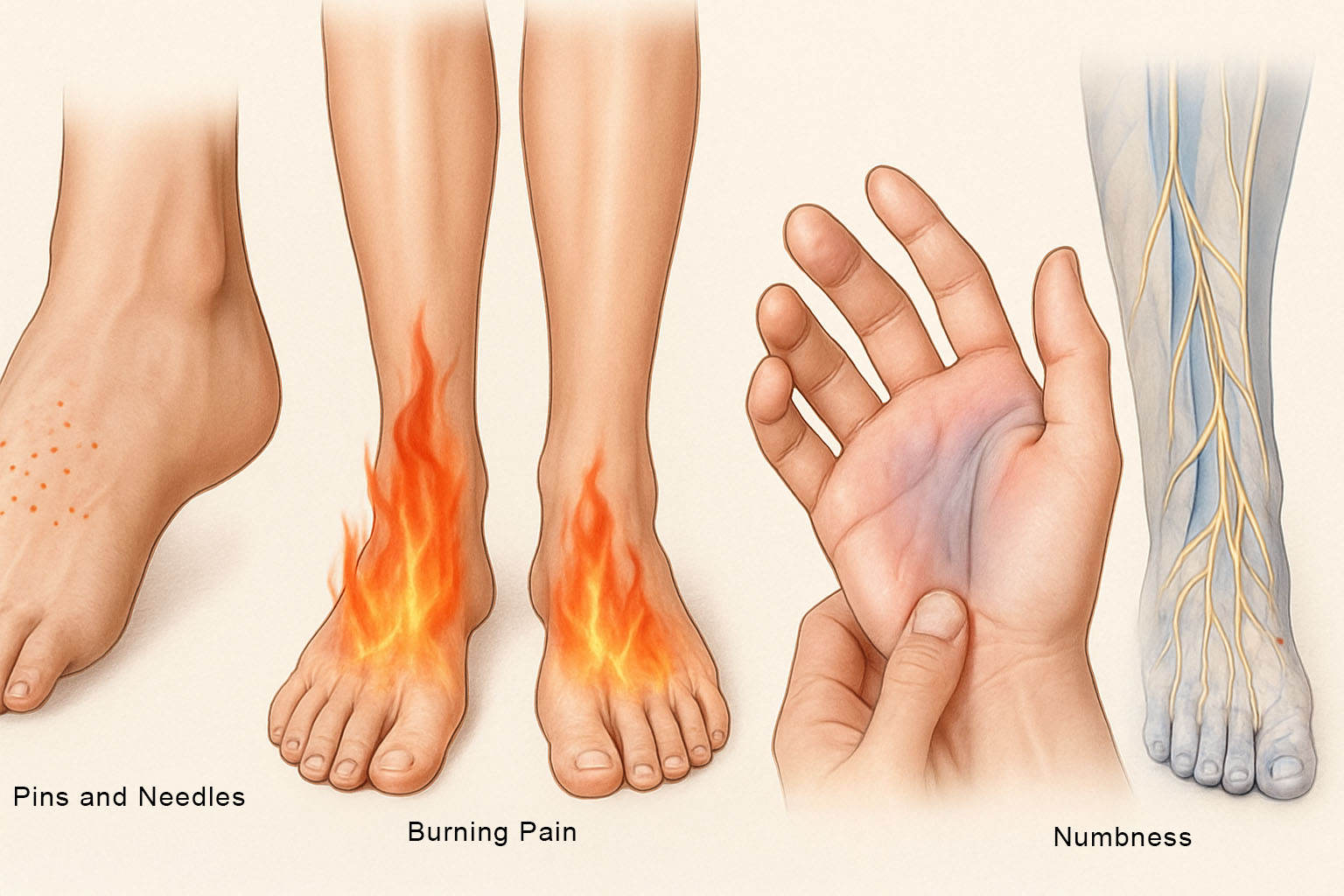
- Tingling or a “pins and needles” feeling: This is often one of the first signs people notice.
- Numbness: A partial or complete loss of feeling, which can make it difficult to feel the ground when you walk or notice an injury like a cut or blister.
- Burning pain: Many people describe a persistent, hot, or burning sensation, which can be worse at night.
- Sharp, jabbing, or electric-like pain: These pains can come and go without warning.
- Extreme sensitivity to touch: For some, even the light pressure of a bedsheet can be painful.
Common symptoms affecting mobility include:
- Muscle weakness: Damaged nerves may not send proper signals to your muscles, leading to weakness in the feet and ankles.
- Lack of coordination and balance: Numbness and muscle weakness can make you feel unsteady on your feet, increasing the risk of falls.
- Changes in foot shape: Over time, severe muscle weakness can lead to foot deformities like hammertoes.
Key Causes of Nerve Damage in the Feet
Nerve damage can happen for many different reasons. Identifying the underlying cause with your doctor is the most important step toward effective management.
- Diabetes: This is the most common cause of peripheral neuropathy. Consistently high blood sugar levels can damage nerves and the small blood vessels that supply them with nutrients. The image in the ad, showing potential plaque in an artery, alludes to circulatory issues that are often linked with diabetes.
- Vitamin Deficiencies: A lack of certain vitamins, particularly B vitamins (B12, B6, and B1), is crucial for nerve health. Deficiencies can lead to significant nerve damage.
- Physical Injury: A traumatic injury to the feet or legs can directly damage or compress nerves.
- Autoimmune Diseases: Conditions like rheumatoid arthritis, lupus, and Guillain-Barré syndrome can cause the body’s immune system to mistakenly attack its own nerve tissues.
- Circulatory Problems: Reduced blood flow to the feet, a condition known as ischemia, starves the nerves of oxygen and nutrients. This can be caused by narrowed arteries (atherosclerosis) from smoking, high blood pressure, or high cholesterol.
- Kidney or Liver Disease: These conditions can cause toxins to build up in the body, which can damage nerve tissue.
- Excessive Alcohol Consumption: Alcoholism is a common cause of neuropathy, as alcohol can be toxic to nerve tissue and often leads to poor nutrition.
Practical Steps for Managing Discomfort at Home
While it’s essential to work with a healthcare provider to treat the underlying cause of your neuropathy, there are many effective strategies you can use at home to manage symptoms and protect your feet.
1. Prioritize Daily Foot Care
Because neuropathy can reduce your ability to feel pain, small injuries can become serious problems if left unnoticed.
- Inspect Your Feet Daily: Look for cuts, blisters, sores, redness, or swelling. Use a mirror or ask a family member for help if you can’t see the bottoms of your feet.
- Wash and Dry Carefully: Wash your feet daily with lukewarm water and mild soap. Test the water with your elbow, not your foot. Dry them thoroughly, especially between the toes, to prevent fungal infections.
- Moisturize Your Skin: Apply a good moisturizer, such as Eucerin or CeraVe, to the tops and bottoms of your feet to prevent dry, cracked skin, but avoid putting lotion between your toes.
2. Choose the Right Footwear
The right shoes and socks can make a world of difference in comfort and safety.
- Wear Comfortable, Protective Shoes: Look for shoes with a wide toe box, good arch support, and cushioned soles. Brands like New Balance, Brooks, and Hoka One One are often recommended for their supportive designs. Avoid high heels and narrow, pointed shoes.
- Always Wear Socks: Choose soft, seamless socks made from moisture-wicking materials. Padded socks, often marketed as diabetic socks, can provide extra cushioning and protection.
3. Focus on Gentle, Regular Exercise
Physical activity can improve blood flow, reduce pain, and enhance muscle strength and balance.
- Low-Impact Activities: Walking, swimming, and stationary cycling are excellent choices that are easy on the joints.
- Stretching: Gently stretching your calf muscles and feet can help relieve tightness.
- Balance Exercises: Simple exercises like standing on one foot (while holding onto something for support) can help improve your stability.
4. Explore Pain Relief Options
Several over-the-counter methods can help soothe nerve pain.
- Warm Soaks: Soaking your feet in a warm (not hot) Epsom salt bath can be soothing. Again, always test the water temperature first to prevent burns.
- Topical Creams: Creams containing capsaicin (the compound that makes chili peppers hot) or lidocaine can provide temporary, localized pain relief. Brands to look for include Capzasin or Aspercreme with Lidocaine.
5. Make Supportive Lifestyle Choices
Your overall health has a direct impact on your nerves.
- Eat a Balanced Diet: Focus on a diet rich in fruits, vegetables, whole grains, and lean proteins to ensure you get essential vitamins and minerals for nerve health.
- Manage Blood Sugar: If you have diabetes, maintaining tight control of your blood sugar is the single most important thing you can do to prevent neuropathy from worsening.
- Limit or Avoid Alcohol: Reducing alcohol intake can prevent further nerve damage.
Frequently Asked Questions
Can foot neuropathy be reversed? In some cases, if the underlying cause is addressed (like a vitamin deficiency), nerve function can improve. However, for many people, especially those with diabetes, the nerve damage is permanent. The goal of management is to prevent further damage, reduce painful symptoms, and maintain function.
What vitamins are best for nerve health? B vitamins, particularly B1, B6, and B12, are vital for a healthy nervous system. Alpha-lipoic acid, an antioxidant, has also shown some benefit in studies. However, you should always speak with your doctor before starting any new supplements, as taking too much of certain vitamins can be harmful.
When should I see a doctor? You should always consult a doctor for a proper diagnosis if you experience symptoms of neuropathy. It is especially important to seek medical attention if you notice a sore or ulcer on your foot that isn’t healing, signs of infection like redness or pus, a sudden increase in pain, or a significant change in your ability to walk or maintain balance.