Master German Step by Step: Online Courses to Build Your Language Skills
Learning German can open new opportunities for travel, education, work, and everyday communication. Whether you are starting from zero or want to improve skills you already have, an online German course can provide a flexible way to build vocabulary, grammar, listening, speaking, reading, and writing step by step.
Modern German classes online make it possible to study from home, follow structured lessons, practice real-life conversations, and progress at a pace that fits your schedule.
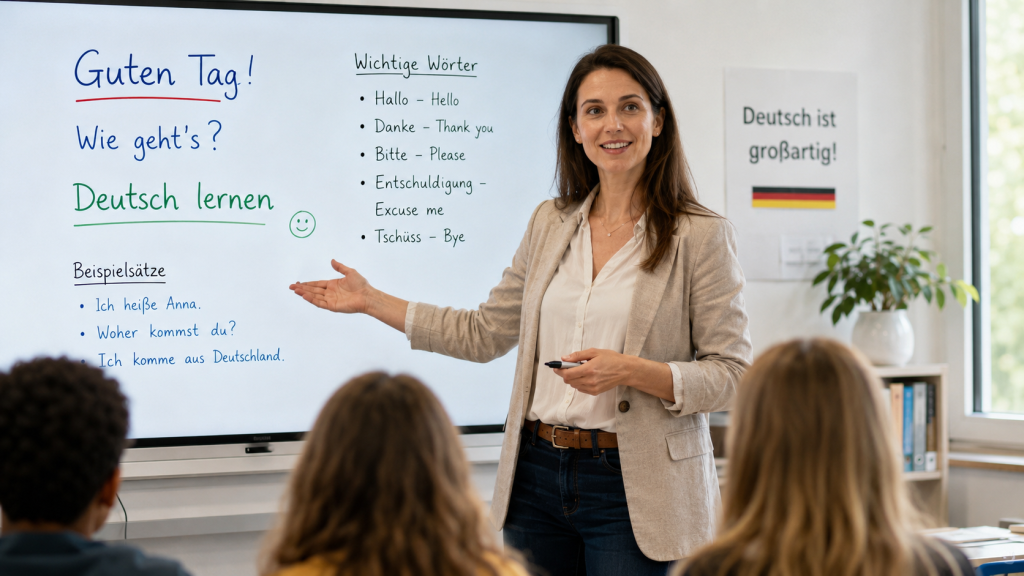
Online German Course — Learn Anytime, Anywhere
Looking for a convenient way to learn German online?
Online German courses are available for learners at many different skill levels, from complete beginners learning basic greetings and everyday phrases to advanced students developing professional and academic communication skills.
German language proficiency is commonly described using the CEFR levels A1, A2, B1, B2, C1 and C2, progressing from basic language use to proficient communication.
A structured course can help you focus on practical skills rather than simply memorizing individual words. Lessons may include listening exercises, pronunciation practice, grammar, vocabulary, reading activities and interactive speaking practice.
Whether your goal is travel, work, study or personal development, an online German language course can help you create a clear learning path.
Why Choose an Online German Course?
Flexible Learning That Fits Your Schedule
One of the biggest advantages of learning German online is flexibility.
Depending on the course, students may be able to access lessons, exercises and study materials from a computer or tablet and combine independent learning with live online sessions.
Some established language providers offer both group-based online German classes and individual online learning options, giving learners different ways to organize their studies.
This can be useful for students, working professionals and anyone who cannot attend traditional classroom lessons regularly.
German Courses for Beginners and Advanced Learners
You don’t need to speak German before getting started.
A German course for beginners usually introduces essential topics such as:
- Greetings and introductions
- Numbers, dates and time
- Shopping and ordering food
- Asking for directions
- Family and everyday life
- Basic sentence structure
- Common German vocabulary
- Simple conversations
As your skills improve, intermediate and advanced German courses can introduce more complex grammar, longer conversations, professional vocabulary and written communication.
Courses following the CEFR framework can progress through levels from A1 to C2. Goethe-Institut, for example, offers German courses across these proficiency levels.
Learn German for Real-Life Communication
Knowing grammar is useful, but being able to actually communicate is usually the bigger goal.
A practical German speaking course may focus on situations such as introducing yourself, making appointments, talking to coworkers, traveling, shopping, visiting restaurants and handling everyday conversations.
Students can also develop the four major language skills:
Speaking
Practice forming sentences, expressing ideas and responding naturally in conversations.
Listening
Improve your ability to understand spoken German at different speeds and in different everyday situations.
Reading
Learn to understand messages, signs, emails, articles and other common German texts.
Writing
Develop the ability to write messages, emails, short texts and eventually more professional or academic content.
German language examinations such as telc also evaluate skills including reading, listening, writing and speaking, showing why balanced language practice can be important.
Who Can Benefit From Learning German Online?
Complete Beginners
If you have never studied German before, an A1 German course online can help you build a foundation from the beginning.
You can start with pronunciation, basic vocabulary and simple sentence patterns before moving gradually toward more complex communication.
Professionals Who Want to Improve Career Communication
German can also be useful for professionals working with German-speaking colleagues, customers or companies.
A Business German course may focus on practical topics such as:
- Workplace conversations
- Professional emails
- Meetings
- Telephone communication
- Presentations
- Industry-related vocabulary
- Job interview language
Learners interested primarily in career development can therefore search for German for work, Business German online courses, or professional German classes rather than general beginner lessons.
Students Planning to Study in a German-Speaking Environment
Students may need stronger reading, writing, listening and presentation skills than casual learners.
Academic-focused German courses can help learners become more comfortable understanding longer texts, participating in discussions and communicating in educational environments.
Travelers and Everyday Learners
Not everyone needs German for a certificate or a career.
Some learners simply want to communicate more comfortably while traveling or speaking with German-speaking friends and family.
In this case, a conversational German course may be more useful than an intensive academic program.
German Courses With Certificates
Some learners specifically search for an online German course with certificate.
Certificate options vary by course provider, so it is important to check exactly what type of certificate is awarded and what it represents before enrolling.
Learners preparing for formal German proficiency tests may also encounter qualifications from organizations such as Goethe-Institut and telc. Both provide German language assessment options connected to CEFR proficiency levels.
If certification is important for your education, work or another official purpose, check the requirements of the institution requesting proof of German proficiency before choosing an exam or course.
What to Look for in an Online German Course
Not every German program uses the same teaching style.
Before choosing a course, compare features such as:
Your Current German Level
Beginners should look for courses starting at A1 German, while experienced learners may need A2, B1, B2 or advanced-level lessons.
Live Classes or Self-Paced Learning
Live classes can provide direct interaction and speaking practice.
Self-paced German courses can offer greater flexibility for learners with changing schedules.
Some programs combine both approaches.
Speaking Practice
If your main goal is conversation, look for courses that include regular speaking exercises rather than focusing only on vocabulary and grammar.
Course Length and Study Schedule
Compare how many lessons are included, how often classes take place and whether you can study at your own pace.
Certificate or Exam Preparation
If certification matters to you, check whether the program simply provides a course-completion certificate or specifically prepares students for an established German language examination.
Build Your German Skills Step by Step
Learning a language takes consistent practice, but you do not need to master everything at once.
Start with the skills most useful to you.
For beginners, that might mean learning common phrases and developing basic conversation skills. Intermediate learners may focus more heavily on grammar, listening and speaking. Advanced learners can work toward professional, academic or fluent communication.
From German courses for beginners to Business German, conversation classes and exam preparation, there are many online learning options available for different goals.
Start Exploring German Courses Online
Whether you want to learn German for work, study, travel or personal development, the right course depends on your current level, schedule and goals.
Compare online German courses, beginner classes, speaking programs, certification options and professional German training before deciding which learning path works best for you.
Start with the basics, practice regularly and build your German skills one step at a time.